Individual counselling in Victoria, BC · Online Across BC · Select in-person dates in Vancouver each month

Therapy for People Who Never Imagined They’d Need Therapy

Individual counselling for leaders, professionals and business owners in Victoria, BC and online across British Columbia.


with Dr. Steve Conway, RCC, ACS, PCC

  • Accepting New Clients
Individual counselling

Feel Better to Lead Better


Individual counselling that combines psychological depth with practical change, helping leaders and professionals improve their emotional wellbeing, strengthen relationships, build resilience, and create a better quality of life.

You can be doing well and still not be doing well. You may still be working, leading, making decisions, supporting other people, and meeting your responsibilities. From the outside, very little may appear wrong.

But perhaps it’s taking more out of you than it used to.

You’re more tired, anxious, irritable, or overwhelmed. You have trouble switching off. Your patience is shorter. Relationships are feeling the strain. Things that once felt manageable feel heavier. Or perhaps life looks successful on the outside, but privately you recognize that you simply don’t feel particularly well anymore.

About Dr. Conway

Experience That Understands Your World


I have spent almost 35 years supporting people, groups, and organizations through challenge and change, including 24 years as a psychotherapist and almost 18 years as an executive and leadership coach and advisor.

I have also held senior leadership positions myself, including Vice President, Managing Director, Board Chair, and Director roles.

That combination of clinical and leadership experience shapes how I work.

Many of the people who seek counselling with me are accustomed to being the capable person in the room. They solve problems, manage complexity, support other people, and carry significant responsibility.

Credentials & Practice Details

  • Registered Clinical Counsellor (RCC)
  • Approved Clinical Supervisor (ACS)
  • Professional Certified Coach (PCC)
  • Doctorate in Clinical Psychology
  • MBA focused on leadership and teams
  • Almost 35 years supporting people, groups, and organizations

Individual counselling for adults. In person in Victoria and virtual throughout British Columbia

Because my work combines clinical depth with practical change, I only take on a limited roster of clients who are committed to doing active work outside the room. If we aren’t the right match, I will gladly direct you to colleagues better suited to your needs.

15-Minute Fit & Intake Assessment Accepting New Clients 35+ Years Experience $275 per session

Professional success does not protect anyone from anxiety, depression, burnout, relationship difficulties, grief, self-doubt, loneliness, uncertainty, or becoming exhausted from carrying too much for too long.

Leadership can also be isolating. There are decisions you cannot easily discuss with your team. Relationships are complicated by authority. Other people may expect you to remain confident when you are uncertain yourself.

Sometimes the person everyone else relies upon needs somewhere they don’t have to be the person who has everything figured out.

What It’s Like to Work With Me


People sometimes arrive expecting therapy to feel formal, clinical, or uncomfortable.
That isn’t my style.

Conversational, not clinical

Our conversations are professional, but they are also human. I’m not particularly interested in hiding behind professional language or turning ordinary human experiences into therapy-talk.

Practical and direct

I ask questions, listen carefully, and offer observations, perspectives, and feedback when they may be useful.

Human, with room for humour

While our work can involve difficult subjects, it doesn’t need to feel heavy all the time. Humour often has a place, as do honesty, curiosity, and the recognition that life can be complicated.

Most people already know when something isn’t working in their lives. What they often need is a place where they can speak openly, understand themselves more fully, work through what they’re experiencing, and begin making changes that help them feel and live better.

Therapy is a professional relationship, but at its core it is also a human conversation.

What brings people to counselling

You don’t need to be in crisis to benefit from counselling.

People come to counselling for many different reasons. Sometimes there is a clear problem. Sometimes several things have accumulated over time. And sometimes there is simply a growing sense that something isn’t right or that life could be better than it currently feels.

You may be functioning well while feeling increasingly depleted underneath. Work takes more effort. Your patience is shorter. You have difficulty switching off or find there is little energy left for the people and things that matter outside work.
Burnout can affect much more than your professional life. Chronic stress and exhaustion can influence sleep, mood, relationships, concentration, motivation, physical wellbeing, and your ability to enjoy life.

Sometimes the problem is workload. Sometimes it involves perfectionism, over-responsibility, difficult relationships, unrealistic expectations, poor boundaries, organizational pressures, or simply carrying too much for too long. Often it is a combination.

Counselling can help you understand what is contributing to the exhaustion, address its emotional and relational impact, and begin developing a healthier and more sustainable way of living.

The goal isn’t to help you become better at tolerating an unsustainable life.

Anxiety can show up as persistent worry, overthinking, difficulty relaxing, feeling on edge, anticipating what might go wrong, or replaying conversations and decisions long after they have happened.

For people carrying significant responsibility, some degree of worry can feel almost inseparable from the role. The problem is when it begins consuming too much mental and emotional energy or affecting your wellbeing, relationships, decisions, or quality of life.
Counselling can help you understand what drives your anxiety, recognize patterns that may be maintaining it, and develop healthier ways of responding to uncertainty, pressure, and stress.

Depression doesn’t always mean being unable to function.

You may continue working, meeting responsibilities, and appearing perfectly capable while privately feeling flat, disconnected, unmotivated, discouraged, or unlike yourself.

Things you once enjoyed may feel less satisfying. You may have less energy, withdraw from others, become more irritable, or wonder why a life that appears successful doesn’t feel particularly good.
Counselling provides a place to understand what is happening and what may be contributing to it, while working toward greater emotional wellbeing, connection, enjoyment, and hope.

Even highly capable people can find relationships complicated.
You may be dealing with conflict, disconnection, communication difficulties, family pressures, changing relationships, or patterns that seem to repeat despite your efforts to resolve them.

Counselling can help you better understand your own reactions and relationship patterns, communicate more effectively, establish healthier boundaries, navigate conflict, and strengthen the relationships that matter to you.

Leadership and professional responsibility can be enormously rewarding, but they can also create pressures that few people fully appreciate from the outside.
Difficult decisions. Workplace conflict. Organizational politics. Career transitions. Responsibility for other people. Uncertainty about what comes next.
There may also be things you simply cannot discuss openly with colleagues, employees, or even the people closest to you.

Because I have spent much of my own career leading people and organizations, you won’t need to spend half the session explaining the realities of organizational life before we can begin talking about how those realities are affecting you.

Sometimes the issue isn’t a mental health crisis. It’s the realization that something has changed.

You may feel less confident than you once did. You may be questioning your career, relationships, identity, or direction. Achievement may no longer provide the satisfaction it once did. Or you may simply feel stuck despite knowing something needs to change.

Counselling provides an opportunity to explore these questions more deeply, understand what may be underneath them, and consider what you want the next part of your life to look like.

Resilience isn’t simply becoming better at tolerating stress or pushing through whatever life throws at you.

Sometimes resilience means adapting. Sometimes it means recovering from something difficult. Sometimes it means setting limits, changing expectations, asking for help, having a conversation you’ve been avoiding, or recognizing that something genuinely needs to change.
Counselling can help strengthen the emotional and psychological resources you draw upon when life becomes difficult while also helping you protect your relationships, wellbeing, and sense of self.

Ultimately, resilience should help you do more than cope.

It should help you live well and thrive.

My Approach to Counselling

Psychological depth with practical goal-oriented change.


Insight matters, but insight does not necessarily create change.

I want to understand not only what is happening in your life, but what may be contributing to it. That can mean exploring patterns of thinking, feeling, behaving, and relating to others; understanding how earlier experiences may continue to influence you today; and recognizing ways of coping that may once have served you well but are no longer working.

You can understand yourself remarkably well and still find yourself repeating the same patterns, struggling with the same relationships, or responding to difficult situations in ways you wish you could change.

The people who tend to do best in counselling with me are willing to balance reflection and insight with a willingness to take action.

That might mean practising a different way of responding to anxiety, changing how you communicate in an important relationship, establishing a boundary, approaching conflict differently, challenging a longstanding belief, developing healthier ways of managing difficult emotions, or making a difficult change in your life.

The action will look different for every person. What matters is that counselling gradually begins to make a difference outside the counselling room.

While this is individual counselling, not coaching, my style is active and conversational. I ask questions, listen carefully, and offer observations, perspectives, and feedback when they may be helpful.
We may explore the past when it helps us understand the present, while keeping sight of the changes you want to make in your life today.

MORE THAN PERFORMING BETTER

What Can Change Through Counselling


The goal is not simply to help you perform better.

Work and leadership may be important parts of your identity and wellbeing, so naturally they may be part of our conversations. And yes, feeling better personally can help you lead better professionally.

But counselling is about the whole person.
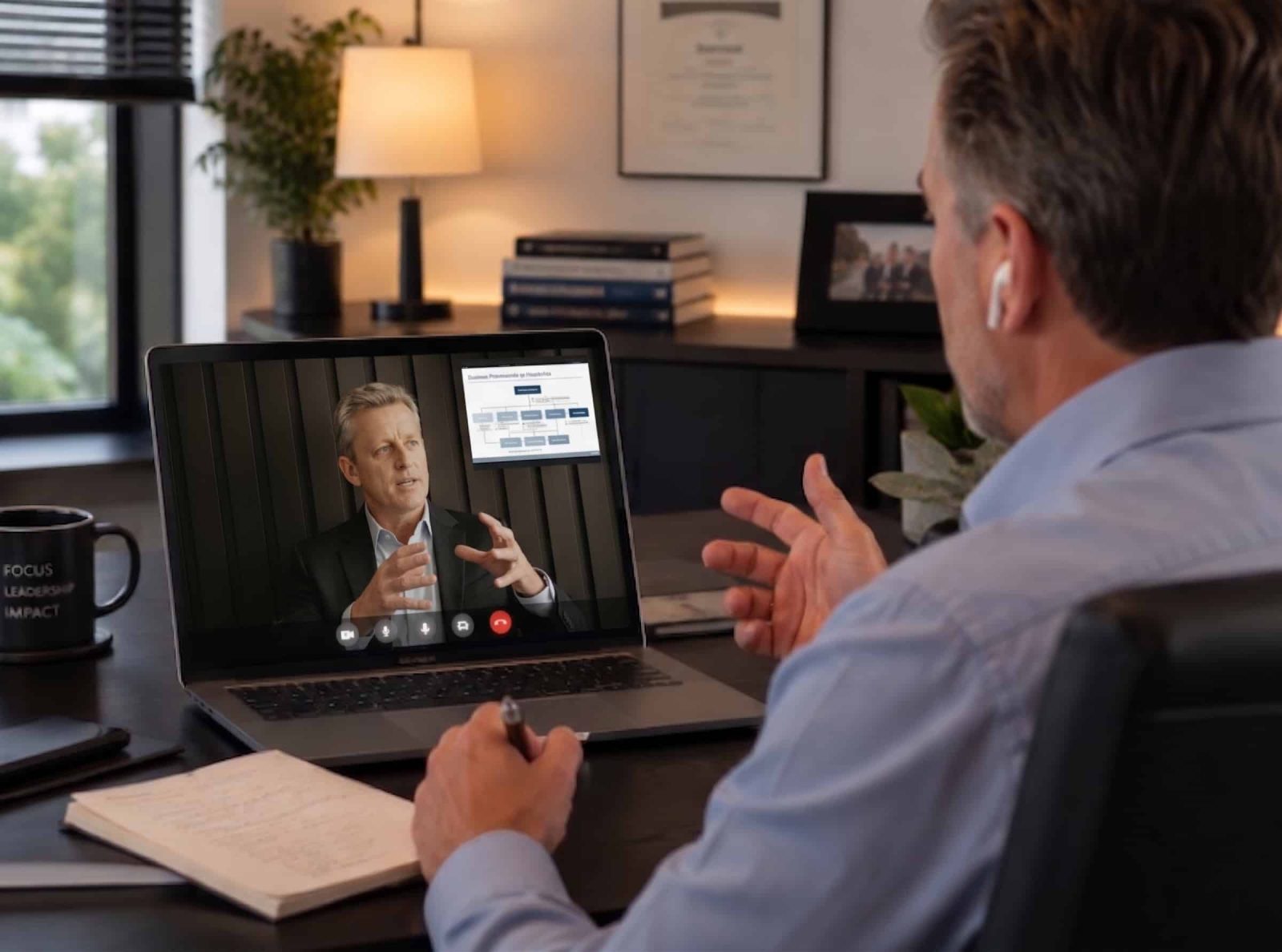
Our work may help you experience:

  • Greater emotional wellbeing and resilience 
  • Less anxiety, stress, overwhelm, or emotional exhaustion 
  • Greater clarity and perspective 
  • Better emotional regulation under pressure 
  • A stronger sense of confidence and self-understanding 
  • Healthier and more satisfying relationships at work and at home 
  • Greater ability to recognize and change patterns that are no longer serving you 
  • More confidence navigating conflict, difficult conversations, and challenging relationships 
  • Practical strategies you can use in everyday life 
  • A healthier relationship with work, responsibility, and achievement 
  • A renewed sense of purpose, direction, and control 
    Greater capacity to enjoy life rather than simply manage it 
    Improved overall wellbeing and quality of life 

Feeling better matters in its own right.

And for leaders, feeling better can also mean having more emotional capacity, perspective, patience, and presence for the people who rely on you.